
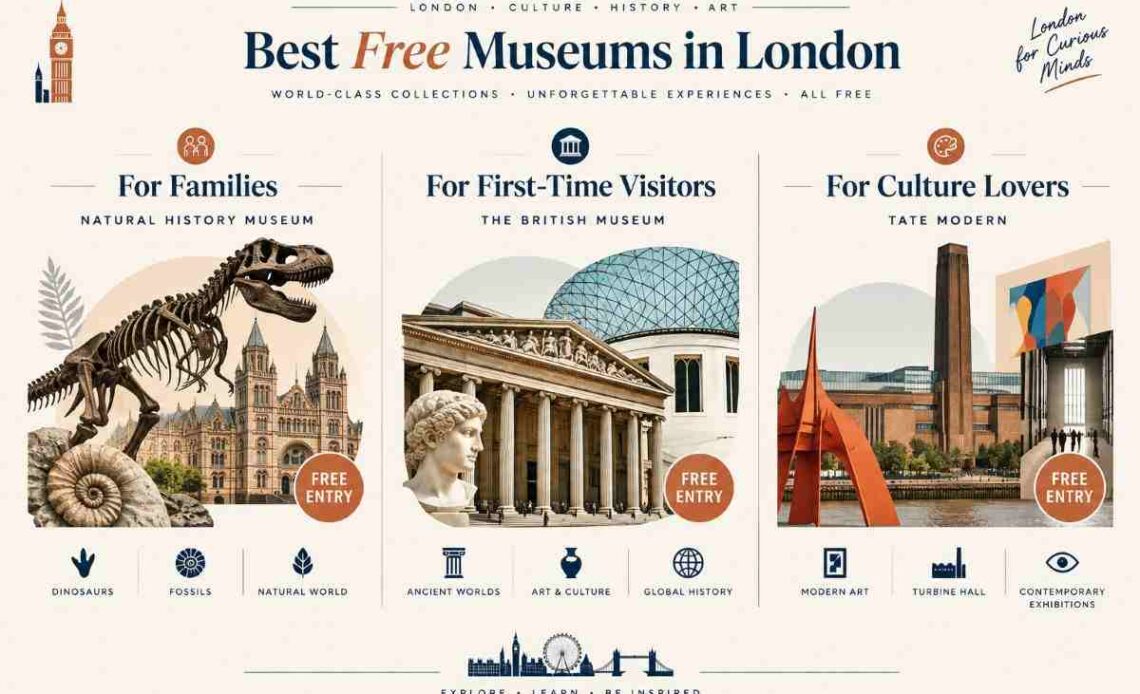
London is one of the best cities for a culture-filled day out without spending money on admission. Many major museums offer free access to their permanent collections, from dinosaur skeletons and ancient artefacts to world-famous paintings and design.
The best free museums in London depend on what you want from your visit. Families may prefer interactive galleries, first-time visitors might want iconic landmarks and famous collections, while art lovers can spend hours exploring paintings, sculpture and design.
This guide highlights museums worth prioritising, explains what makes each one special and shares practical tips for planning a visit. Most are free to enter, although some temporary exhibitions, activities and special experiences may cost extra. Check the official website before travelling, as booking and opening arrangements can change.
Best Free Museums in London at a Glance
| Museum | Best for | Area |
|---|---|---|
| Natural History Museum | Dinosaurs, wildlife and families | South Kensington |
| Science Museum | Interactive science and space | South Kensington |
| British Museum | World history and first-time visitors | Bloomsbury |
| Young V&A | Children’s creativity and play | Bethnal Green |
| V&A South Kensington | Art, fashion and design | South Kensington |
| National Gallery | Famous paintings and classic art | Trafalgar Square |
| Tate Modern | Modern art and architecture | Bankside |
| National Maritime Museum | Ships, exploration and family visits | Greenwich |
| London Museum Docklands | London’s river and trading history | Canary Wharf |
| Horniman Museum | Natural history, music and culture | Forest Hill |
The permanent collections at many major national museums are free. Some exhibitions and activities cost extra, and certain museums recommend or require free timed-entry tickets. Always check the venue’s official visitor information before setting off. VisitBritain+1
1. Natural History Museum: Best for Families and Curious Minds
The Natural History Museum is a strong choice for families, especially children who love dinosaurs, animals or the natural world.
The museum’s free galleries explore life on Earth, from prehistoric creatures to minerals and human evolution. The blue whale skeleton in Hintze Hall is a memorable first stop, while the dinosaur galleries are a major draw for younger visitors.
- Why visit: It combines impressive displays with subjects that children can explore at their own pace.
- Plan ahead: The museum is free to enter, but it can become busy during weekends and school holidays. Booking a free entry ticket is a useful way to help guarantee entry. Check for any temporary gallery closures before travelling.
2. Science Museum: Best for Interactive Learning
The Science Museum makes science approachable through objects, demonstrations and galleries covering space, medicine, engineering and technology.
It is a good choice for children who prefer exploring and asking questions to quietly looking at displays. Adults can also enjoy its history of inventions and scientific discoveries.
- Why visit: It offers a lively introduction to science and technology for different ages.
- Plan ahead: General admission is free, but some special experiences and activities have separate charges. Check the museum’s current ticket information if there is a particular gallery or activity your family wants to see.
3. British Museum: Best for First-Time Visitors
The British Museum is an excellent starting point for visitors who want to explore world history in one place.
Its collection spans cultures and periods, with highlights including the Rosetta Stone, Egyptian mummies and objects from ancient Greece, Rome, Asia, Africa and the Americas. The Great Court, with its striking glass roof, is also worth seeing.
- Why visit: It offers a broad introduction to human history and some of London’s best-known museum objects.
- Plan ahead: Entry to the permanent collection is free. The museum recommends booking a free ticket in advance; walk-in entry may depend on capacity. Families can also check the availability of explorer trails and gallery activities.
4. Young V&A: Best for Younger Children and Creative Families
The Young V&A is designed around children’s creativity, imagination and play.
Its Play, Imagine, and Design galleries encourage young visitors to explore ideas through objects, activities and creative experiences. It can be especially appealing to families who want a museum visit that feels active rather than formal.
- Why visit: It gives children space to play, make and explore design in a museum setting.
- Plan ahead: General admission is free, and the V&A says visitors do not need to book for entry. Some temporary exhibitions may charge. Check the current family and accessibility information, particularly if you are visiting with a pushchair.
5. V&A South Kensington: Best for Art, Fashion and Design
The Victoria and Albert Museum—often called the V&A—is a rewarding choice for culture lovers interested in how people create and use objects.
Its permanent galleries cover fashion, jewellery, ceramics, sculpture, furniture, architecture and decorative arts. The collection is large, so it is worth choosing a few areas rather than trying to see everything in one visit.
- Why visit: It offers a wide view of art and design across different periods and cultures.
- Plan ahead: General admission is free, but temporary exhibitions may require paid tickets. The V&A also sits close to the Natural History Museum and Science Museum, making South Kensington useful for a multi-museum day.
6. National Gallery: Best for Famous Paintings
The National Gallery is a natural choice for first-time visitors and anyone interested in European painting.
Its collection includes works by artists such as Van Gogh, Turner, Rembrandt and Titian. You do not need to be an art expert to enjoy it: choose a few paintings that catch your attention and take time to look closely.
- Why visit: It brings celebrated paintings together in a central London location overlooking Trafalgar Square.
- Plan ahead: General admission is free. A free ticket can be booked for fast-track entry, while walk-up entry is also available. Some exhibitions charge separately.
7. Tate Modern: Best for Modern and Contemporary Art
The Tate Modern is housed in a former power station on the South Bank and is a destination in its own right for art and architecture.
Its collection includes modern and contemporary works, with displays that explore different artists, ideas and movements. The large Turbine Hall is often a highlight, although its installations and exhibitions change.
- Why visit: It offers a different experience from traditional galleries, with ambitious works and a distinctive building.
- Plan ahead: The main collection is free to explore, while some exhibitions require paid tickets. You can combine the visit with a walk along the Thames or across the Millennium Bridge.
8. National Maritime Museum: Best for Maritime History and Greenwich
The National Maritime Museum explores Britain’s maritime history, navigation, exploration and the relationship between people and the sea.
It is a good option for families and history enthusiasts who want a museum visit outside central London. Greenwich also offers a wider day out, with historic buildings and open spaces nearby.
- Why visit: Its galleries connect maritime history with exploration, trade, science and everyday life.
- Plan ahead: The museum’s permanent galleries are free. Check its official visitor information for current opening arrangements and any ticketed exhibitions or activities.
9. London Museum Docklands: Best for London’s Hidden History
At London Museum Docklands, visitors can explore how the River Thames and the docks shaped the capital.
The museum is based in a historic warehouse and covers trade, migration, dock work and the changing East End. Its displays offer a different perspective from the better-known royal and political stories of London.
- Why visit: It gives context to the city’s development and the lives of people who worked and lived around the docks.
- Plan ahead: General admission is free, though some activities may have separate charges. Families should check the current information for the Mudlarks play area, including any booking requirements. visitlondon.com+1
10. Horniman Museum: Best for an Unusual Family Day Out
The Horniman Museum and Gardens brings together natural history, anthropology and musical instruments in a distinctive setting.
It suits visitors who enjoy discovering unexpected objects and learning about different cultures. The gardens also make it possible to add some outdoor time to the visit, depending on the weather.
- Why visit: Its varied collections make it an appealing choice for families and curious visitors who want something beyond the central London museum circuit.
- Plan ahead: Check the museum’s current visitor information for gallery access, exhibitions and any ticketed activities.
How to Plan a Free Museum Day in London
A little planning can help you enjoy more of the museum and spend less time travelling or queuing.
Choose museums in the same area
South Kensington is especially convenient for a museum day because the Natural History Museum, Science Museum and V&A are close together. You could visit one in depth or choose a few highlights across two museums.
For art and sightseeing, combine the National Gallery with a walk around Trafalgar Square. Tate Modern works well with a Bankside walk, while the National Maritime Museum can be part of a Greenwich day out.
Check tickets and opening times
Free admission does not always mean you can arrive at any time. Some museums recommend booking a free timed ticket, while popular galleries can have queues during weekends and school holidays.
Before leaving home:
- Check opening hours and planned gallery closures.
- Reserve free entry where recommended.
- Check whether a special exhibition or family activity costs extra.
- Look at the museum’s accessibility and family facilities.
- Decide on two or three highlights rather than trying to see everything.
Keep the day affordable
Museum admission may be free, but transport, food and special activities can add to the cost. Bring a water bottle and snacks where the venue permits them, and check the museum’s food and drink rules before your visit.
You can also make the day more enjoyable by leaving time for a nearby park, riverside walk or café instead of rushing from one museum to another.
Frequently Asked Questions
Are museums in London free for tourists?
Yes. Many major London museums offer free admission to their permanent collections for visitors, including international tourists. Special exhibitions and some activities may cost extra. GOV.UK+1
Which free museum in London is best for children?
The Natural History Museum and Science Museum are excellent choices for children interested in dinosaurs, animals, science and space. Young V&A is particularly suited to younger visitors who enjoy play and creative activities. visitlondon.com+1
Do I need to book free museum tickets in London?
It depends on the museum. The British Museum recommends advance booking, and the Natural History Museum says a free ticket can help guarantee entry. The V&A says general admission does not require booking. Check each museum’s official website before visiting. British Museum+2
Can you visit more than one free museum in a day?
Yes, if you choose museums close together and keep your plans realistic. South Kensington is one of the easiest areas for a multi-museum visit, but seeing even one large museum properly can take several hours.
What is the best free museum for a first visit to London?
The British Museum is a strong choice for world history, while the National Gallery is ideal for visitors who want to see famous paintings. The Natural History Museum is a memorable option for families and nature lovers.
Make the Most of London’s Free Culture
London’s free museums offer much more than a rainy-day activity. They provide access to world history, science, art, design and local stories without an admission charge for their permanent collections.
For a first visit, start with the British Museum or National Gallery. For a family day out, consider the Natural History Museum, Science Museum or Young V&A. And if you have already seen the major attractions, explore Greenwich, Docklands or the Horniman for a different view of the city.
The best visit is not necessarily the one with the most museums. Choose a collection that interests you, check the practical details and give yourself time to enjoy it.