
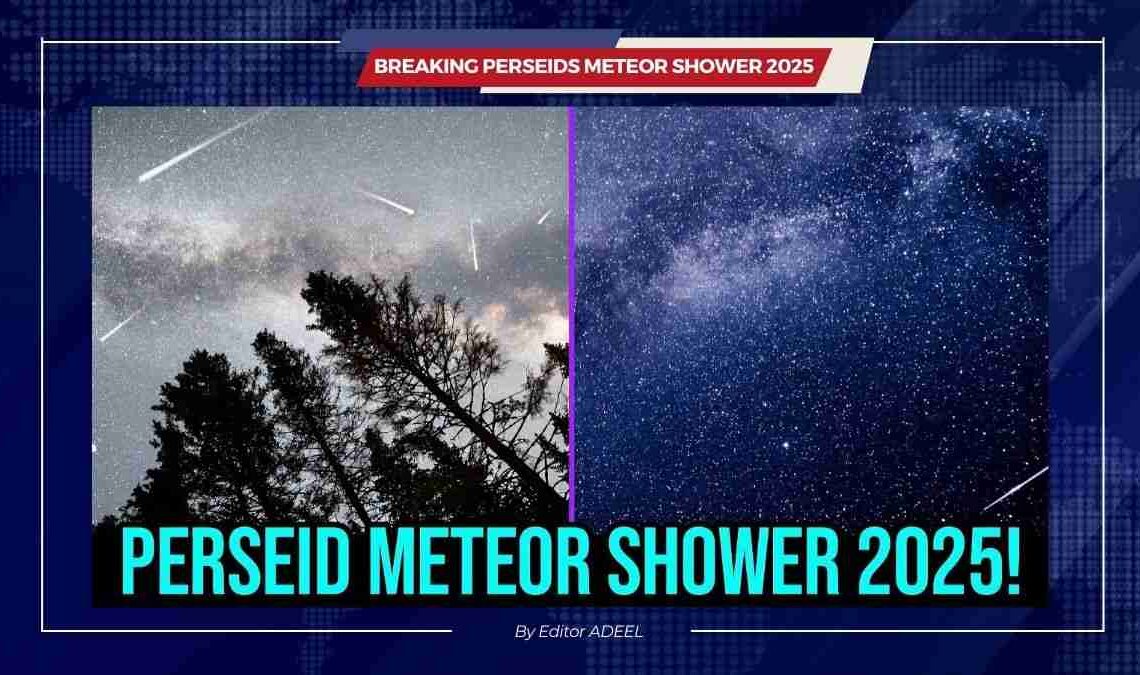
On Tuesday night, stargazers will be treated to something that could be the best meteor showers of the year, as the Perseids meteor shower reaches its peak on Monday and Tuesday nights. This sparkling phenomenon is expected to peak at night on August 12.
The shower lights up the skies every year in the summer, and is well-known for its fast-moving meteors. However, the bright moonlight could affect the visibility, making it harder to see the fainter Streaks.
The Perseids could be visible to the naked eye, but weather plays a huge role in the visibility. So, it is crucial to check the weather forecast before heading out to see the meteor shower tonight.
An astrophysicist at the University of Sheffield, Dr Richard Parker, explained that each year, Earth passes through an ancient celestial body, Comet 109P/Swift-Tuttle. He further added that it is estimated to be well over 5bn years old, older even than our Earth.
He said that the comet is the largest object that approaches Earth. Thankfully, it’s not expected to come dangerously close for thousands of years.
The comet’s next closest trip to Earth is not until 2126, as the comet visits the solar system every 133 years.
The stargazers are advised to be within the best chance of catching a glimpse of the breathtaking view of the Perseids meteor shower. The stargazers should look towards the east-south-east in the direction of Saturn, or else to the north.
Also, it is best to observe when the light condition is low, but, notably, it could be harder to catch a glimpse of this year.
August’s full moon arrived over the weekend, so it remains brighter and larger in the sky. The full moon will illuminate the night sky, making it harder to catch a glimpse of the mesmerising spectacle.
An astronomer at the Royal Observatory Greenwich, Dr Ed Bloomer, told the Guardian that stargazers should go out late at night to view. They should find a dark location, and the best times to watch it are between midnight and 5:30 am.
Clouds could be another factor that impacts the viewing of the meteor shower for stargazers. According to the Met Office, much of South East Wales will be lucky tonight because more clouds cover the West coast of Wales.
Stargazers must ensure that they can see as much of the sky as clearly, with no buildings, trees, or hills blocking the view of the sky. They should lie on their back and look upwards, as meteors can appear in any corner of the sky.