
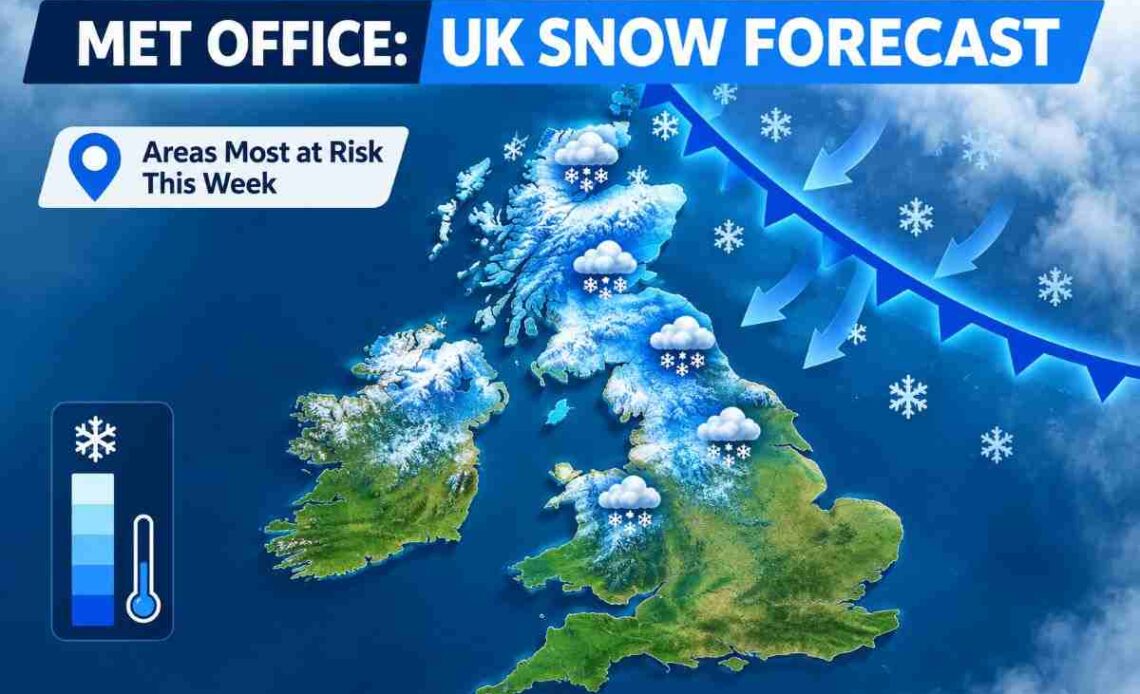
The first snow flurries of the season have been forecast for parts of Scotland as colder air follows a spell of stormy weather across the UK. But does that mean snow is on the way for other parts of Britain, and should households prepare for winter conditions? The latest Met Office outlook suggests the risk is much more limited than headlines about widespread snowfall might imply.
Where is snow forecast in the UK?
Reports published earlier this week identified parts of the Scottish Highlands as the main areas at risk of early-season snowfall. The forecast focused on higher ground, where temperatures are more likely to fall low enough for snow rather than rain.
The areas identified in reports included:
- Central Highlands: Some elevated locations were forecast to experience brief snow flurries.
- Loch Rannoch: The area was highlighted as a possible location for scattered snowfall.
- Pitlochry and surrounding higher ground: Localised snow was forecast during a short period early on Wednesday.
- Fort William and the surrounding Highlands: Earlier weather maps also indicated the potential for snow over higher elevations in the wider region.
These are locations highlighted in earlier forecasts, not a confirmed list of places that will receive snow over the remainder of this week. The timing and extent of any snowfall can change as weather systems move across Scotland.
According to the Met Office’s UK forecast, updated on Wednesday 28 October, much of the country was expected to experience more settled conditions on Thursday, followed by generally fine weather before a weakening band of rain moved south-eastwards over the weekend. The latest national outlook does not indicate widespread snowfall across the UK. (Met Office)
Why are the Scottish Highlands more likely to see snow?
Snowfall depends on more than the time of year. Air temperature, the temperature of the atmosphere at different heights, moisture and elevation all influence whether precipitation falls as snow, sleet or rain.
Higher ground in Scotland is particularly exposed to colder conditions. When cold air meets a band of rain-bearing cloud, some of the precipitation can turn to snow at altitude, even when lower-lying towns experience rain.
This is why a forecast showing snow over a Highland mountain does not necessarily mean nearby communities will see snow settling on roads or gardens.
The recent storms have also brought attention to changing weather conditions across the country. However, a spell of colder weather following a storm does not, by itself, signal the start of a prolonged cold spell or a widespread winter freeze.
Could snow affect travel this week?
For most people in England, Wales and Northern Ireland, the latest national forecast points towards a quieter end to October than the recent stormy period.
That does not remove every weather-related travel risk. Rain, fog and reduced visibility can affect journeys, while conditions in exposed Highland areas can change quickly. Drivers heading into the Scottish mountains should check local forecasts rather than relying on conditions in nearby towns.
Rail passengers and people travelling by road should also check for service updates if their route passes through areas affected by adverse weather.
Common misconceptions about the UK’s first snow
Does the first snowfall mean a harsh winter is coming?
No. Early snow on high ground does not reliably predict how cold or snowy the rest of winter will be. Seasonal weather patterns can change considerably.
Will snow settle everywhere it falls?
Not necessarily. Light snowfall can melt on contact with relatively warm ground, particularly at lower elevations. Snow settling is more likely when both the air and ground are sufficiently cold.
Does a snow forecast mean every named location will experience snowfall?
No. Forecast maps show the likelihood of particular conditions, not a guarantee that every location within a highlighted area will experience them.
What should you do next?
If you are travelling to Scotland or planning outdoor activities in the Highlands, check the Met Office’s latest local forecast before setting off. Pay attention to any weather warnings and allow extra time for journeys if conditions deteriorate.
For the latest official warnings, consult the Met Office weather warnings page. Conditions can change at short notice, especially in mountainous areas.
The bottom line
The Scottish Highlands were the main focus of reports about the UK’s first snow flurries this week, with Loch Rannoch, Pitlochry and other elevated locations highlighted in earlier forecasts. However, the latest national outlook points towards largely settled conditions for much of the UK, rather than widespread snow.
The important distinction is between snow being possible on high ground and a confirmed snowfall event affecting towns, roads and homes. Check the latest local forecast before making weather-related travel plans.