
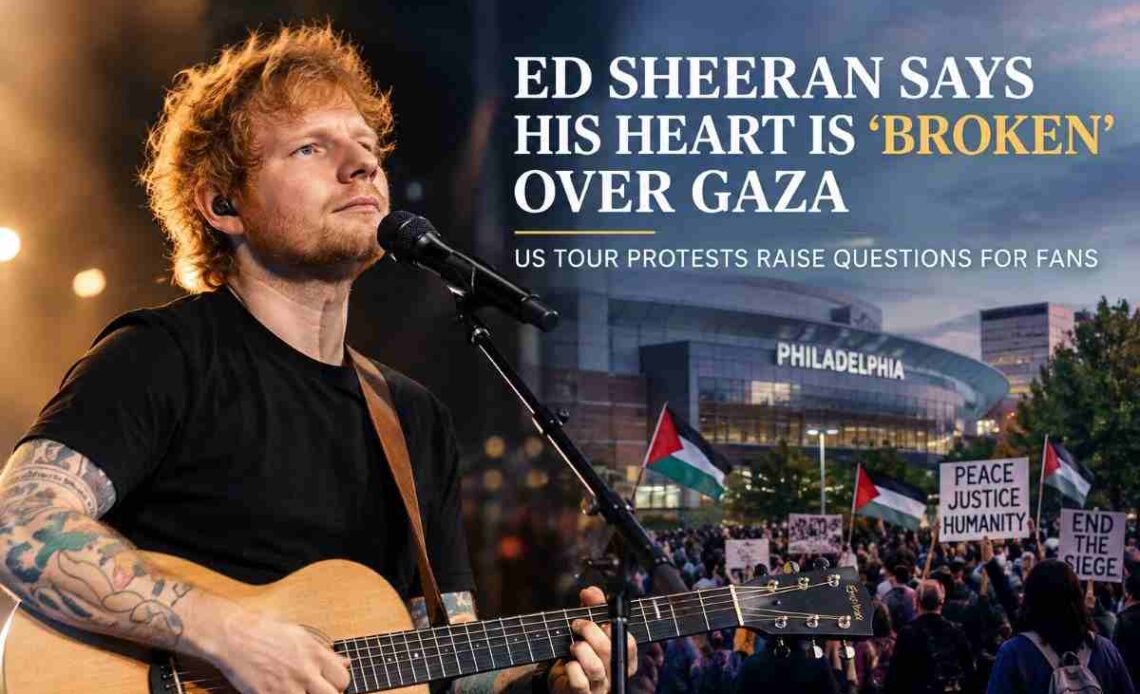
Ed Sheeran’s reported comments about Gaza have brought renewed attention to the humanitarian crisis and the growing debate over how musicians should respond to political issues while performing overseas. With protests reportedly surrounding his US tour, fans may be wondering what he has said, whether concerts could be affected and what this means for people with tickets.
The key distinction is between an artist expressing concern about a conflict, demonstrations taking place around a tour and any confirmed decision to cancel or change a concert. Those are separate developments, and each needs to be verified.
What’s actually true about Ed Sheeran and Gaza?
The controversy centres on Sheeran’s US Loop Tour and the removal of American rapper Macklemore from its supporting line-up.
On 4 September, Macklemore voiced support for Palestinians during a performance at MetLife Stadium in New Jersey, including the slogan “Free Palestine”. The decision to remove him followed objections from stadium owners, according to the tour promoter, Messina Touring Group.
Sheeran subsequently clarified that the removal was not his decision. He said he had tried to mediate between the parties involved, but the dispute escalated as other performers withdrew from the tour in solidarity with Macklemore.
Pitchfork
+1
At his Philadelphia concert on 19 September, Sheeran addressed the situation publicly. He described Gaza’s circumstances as “catastrophic and unjustifiable” and said the scale of civilian and child deaths had broken his heart.
He also condemned the Hamas-led attacks in Israel on 7 October 2023 and spoke about injustice in the occupied West Bank. His message focused on the humanitarian consequences of the conflict and his desire for concerts to remain places where people with differing views could come together.
How this connects to freedom of speech and live music
The dispute raises a wider question: should musicians be able to express political views during concerts, and what happens when those views conflict with the expectations of venues or promoters?
Artists have a public platform, but performing at a stadium involves several parties. The artist, promoter, venue operator and supporting performers may have different contractual obligations and views about what should happen on stage.
The Macklemore dispute illustrates how those interests can collide. Sheeran continued his tour, but his Philadelphia performance took place without the original supporting acts, following their withdrawals. Pro-Palestinian demonstrators also gathered outside the stadium.
For UK fans, the episode is a reminder that international political disputes can affect the entertainment industry, even when the headline act is not the person who made the original political statement.
However, the controversy does not automatically mean that Sheeran’s remaining concerts will be cancelled or that every venue will impose the same restrictions.
Common misconceptions
“Ed Sheeran personally removed Macklemore.”
Sheeran has said the decision was made by the tour promoter, following venue objections. The distinction matters: being the headline artist does not necessarily mean having sole control over every booking decision.
“Sheeran has stayed completely silent about Gaza.”
That is no longer accurate. In Philadelphia, he directly addressed the humanitarian situation and expressed his distress over civilian suffering. His comments came after days of controversy surrounding the tour.
“Protests mean the concert has been cancelled.”
Demonstrations outside a venue do not, by themselves, establish that a performance has been cancelled. The Philadelphia concert went ahead on 19 September, despite protests and the absence of the original opening acts.
What should fans do next?
If you have tickets for an upcoming Ed Sheeran concert, check the official tour website, your ticket provider and the venue’s announcements before travelling.
Pay particular attention to:
- Concert status: Look for an official cancellation, postponement or schedule change rather than relying on social media speculation.
- Supporting acts: Check the latest line-up, as the original performers have withdrawn from the tour.
- Entry arrangements: Follow the venue’s instructions about arrival times, access and any event-specific security measures.
- Refunds: If a concert is cancelled or significantly changed, check the ticket seller’s terms and any official refund announcement. The position may depend on the circumstances and the terms of your purchase.
If you are attending a demonstration, check local police and venue guidance, plan your transport and allow extra time around the stadium.
Key takeaways
Ed Sheeran’s emotional comments in Philadelphia brought his views on Gaza into the centre of a dispute that began with Macklemore’s removal from the US tour. The controversy has prompted supporting performers to withdraw, protests outside a concert and renewed debate about political expression in live music.
For fans, the immediate priority is to distinguish confirmed changes from speculation. Check official concert announcements before making travel or ticket decisions.